Opening a warm dishwasher should feel like pulling clean plates from a steam bath. You expect the sharp, sterile scent of hot water against ceramic. But sometimes, there is a faint, swampy undertone. It hits you just as the door drops open, smelling subtly of wet leaves left too long in a plastic bucket. You ignore it, assuming it is just the scent of damp metal.
You load the plates, scrape the leftover tourtière into the compost, and press start. You trust the machine. It is, after all, a box explicitly designed to blast boiling water and strong detergent across your most intimate eating surfaces.
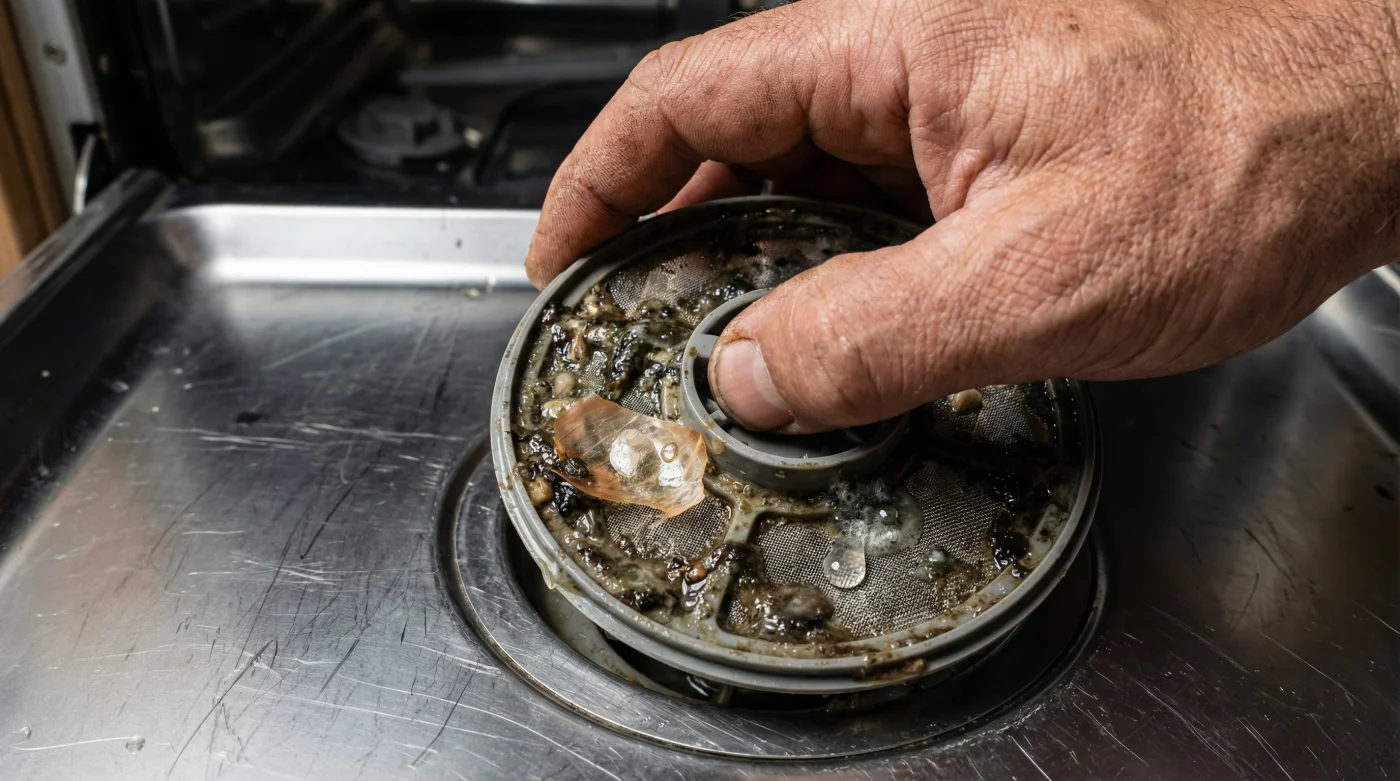
But an appliance designed to clean your dishes is not inherently designed to clean itself. Down in the dark, constantly damp basin of your machine, a slow biological process is taking place out of sight. Below the spinning arms, out of the reach of the soap dispenser, lies a small, perforated cylinder.
The friction of this reality is jarring. The very tool you rely on for family hygiene is secretly harbouring a miniature swamp. Mould thrives in shadows, feeding off microscopic food particles trapped just beneath the wash arm, turning your cleaning appliance into a breeding ground.
The Illusion of the Self-Cleaning Box
Most of us treat the dishwasher like a magic portal. Dirty mugs go in, sparkling mugs come out. We assume the high temperatures simply dissolve the mess into the plumbing, melting grease and spinach into nothingness. We rarely think about the physical mechanics happening behind the sealed door.
Think of your dishwasher like a pair of lungs. It needs to breathe clean water in and exhale dirty water out. When the filter chokes, the machine ends up gargling the exact same greasy water you desperately wanted gone, spraying a microscopic film of yesterday’s dinner over today’s glassware.
Finding a slimy, mould-covered micro-filter isn’t a sign of a broken machine or a failing household. It is actually a sign of a brilliant system working perfectly. The filter is designed to catch the fibrous bits of vegetables and the sticky remnants of maple syrup before they can clog your entire household plumbing. It is taking the hit so your pipes do not have to.
This perceived flaw is suddenly your biggest advantage. A trapped mess is a mess easily removed. You simply have to know where to reach to clear the airway and let the machine breathe again.
Elias Tremblay, a 48-year-old appliance technician operating out of Halifax, sees the aftermath of neglected filters every single day. He charges a standard call-out fee to fix machines that leave grit on glasses. His secret repair? He simply reaches into the bottom of the tub, twists a plastic cylinder counter-clockwise, and pulls out a sludge-covered mesh screen. ‘People scrub their counters twice a day,’ he notes, wiping a grease-stained hand on his coveralls, ‘but they let their plates bathe in last month’s gravy. It just takes three seconds to pull the filter, but nobody knows it exists.’
Tailoring the Wash Routine
Not all wash habits create the same kind of buildup. Depending on what you cook and how you load your plates, the residue clinging to your micro-filter will look and behave differently. Adapting to your specific diet keeps the machine breathing freely and stops mould before it colonizes.
For the Heavy Baker: If your sink regularly sees flour, butter, and heavy cream, your filter is dealing with a paste. Flour acts like cement when mixed with hot water. Your filter will develop a grey, plaster-like coating that requires physical brushing, not just a casual rinse under the tap.
For the Quick-Prep Parent: You rely on oatmeal, macaroni, and quick-rinse sauces. Starchy films are your main adversary here. Starch becomes a gelatinous film that coats the fine mesh, trapping smaller particles and accelerating mould growth in the damp, dark basin of the tub.
- Major Canadian garden centres are permanently phasing out peat moss.
- Health Canada indoor air guidelines are quietly targeting gas stoves.
- Daylight LED lightbulbs are making warm living room paint sterile.
- Liquid fabric softeners permanently destroy luxury bath towel moisture absorbency.
- Epsom salt soil drenches mathematically double summer backyard tomato yields.
The Five-Minute Filter Reset
Restoring your machine requires nothing more than hot water, a bit of mild household acid, and your own hands. Skip the harsh chemical cleaners. They degrade the plastic housing over time and often fail to penetrate the biological slime that protects the mould spores.
Start by pulling the bottom rack out completely. Set it aside. Feel around the base of the lower wash arm, right in the centre of the floor. You are looking for a cylindrical plastic piece, often marked with directional arrows indicating lock and unlock.
Grip the cylinder and turn it gently counter-clockwise. It should release with a satisfying, hollow click. Pull the assembly straight up. You will likely extract a large plastic cage holding a finer, delicate metal or plastic mesh screen inside it.
Take this assembly to your kitchen sink. The cleaning process is tactile, straightforward, and immensely satisfying. Follow these mindful steps to clear the grid:
- Fill a bowl with hot tap water and a cup of standard white vinegar.
- Submerge the filter completely and let it rest for 15 minutes to allow the acid to break down calcium and neutralize mould spores.
- Use an old, soft-bristled toothbrush to gently scrub the mesh. The slime should fall away easily.
- Rinse under high water pressure until the screen is entirely translucent again.
The tools required are likely already sitting in your cupboards. A simple tactical toolkit helps. Hot water at roughly 60 Celsius, white vinegar, a soft brush, and fifteen minutes of patience are all you need.
Peace of Mind at the Push of a Button
There is a quiet satisfaction in maintaining the things that maintain our homes. Holding that freshly scrubbed filter to the light, seeing the clear mesh where sludge used to live, you are actively reclaiming control over your kitchen’s hygiene. It is a small act of care that ripples through your daily life.
We spend so much energy worrying about the quality of the food we prepare for our families. Protecting the plates themselves is just as crucial to our overall well-being.
You walk back to the dishwasher and slide the clean filter into the basin, twisting it clockwise until it locks firm. You slide the bottom rack back into place. You know the dark belly of the machine is now clear, ready to blast away the day’s mess without recycling yesterday’s grime.
The faint smell of damp leaves is entirely gone, replaced by the neutral scent of clean plastic. The next time you press start, listen to the water rushing in. It is a clean sweep. You are no longer just hoping for the best; you are commanding a truly clean system.
A clean machine respects the food you serve your family.
| Key Point | Detail | Added Value for the Reader |
|---|---|---|
| Filter Location | Bottom centre of the tub, beneath the lower spray arm. | Saves you from paying a service call fee for a simple twist-and-pull. |
| Cleaning Frequency | Once a month for daily users. | Prevents hard mineral buildup and completely stops mould colonization. |
| Cleaning Solution | Equal parts hot water and white vinegar. | Avoids toxic bleach, keeping your food-contact surfaces safe and chemical-free. |
Frequently Asked Questions
Does my dishwasher definitely have a manual filter? Models built after 2010 typically use manual micro-filters instead of hard food disposers to reduce noise in open-concept homes.
Why does my dishwasher smell like wet dog? That scent is a direct byproduct of bacteria and mould digesting trapped fats on the filter screen.
Can I use bleach to kill the mould? Bleach degrades the delicate rubber gaskets in your machine. Vinegar is highly effective and completely safe for your appliance.
Do I need to pre-rinse to keep the filter clean? No, modern detergents need food soil to activate properly. Just scrape the large solids into the compost and let the machine do the work.
How do I know the filter is locked back in? You will feel a firm click as the arrows align. A loose filter will let debris destroy the wash pump.