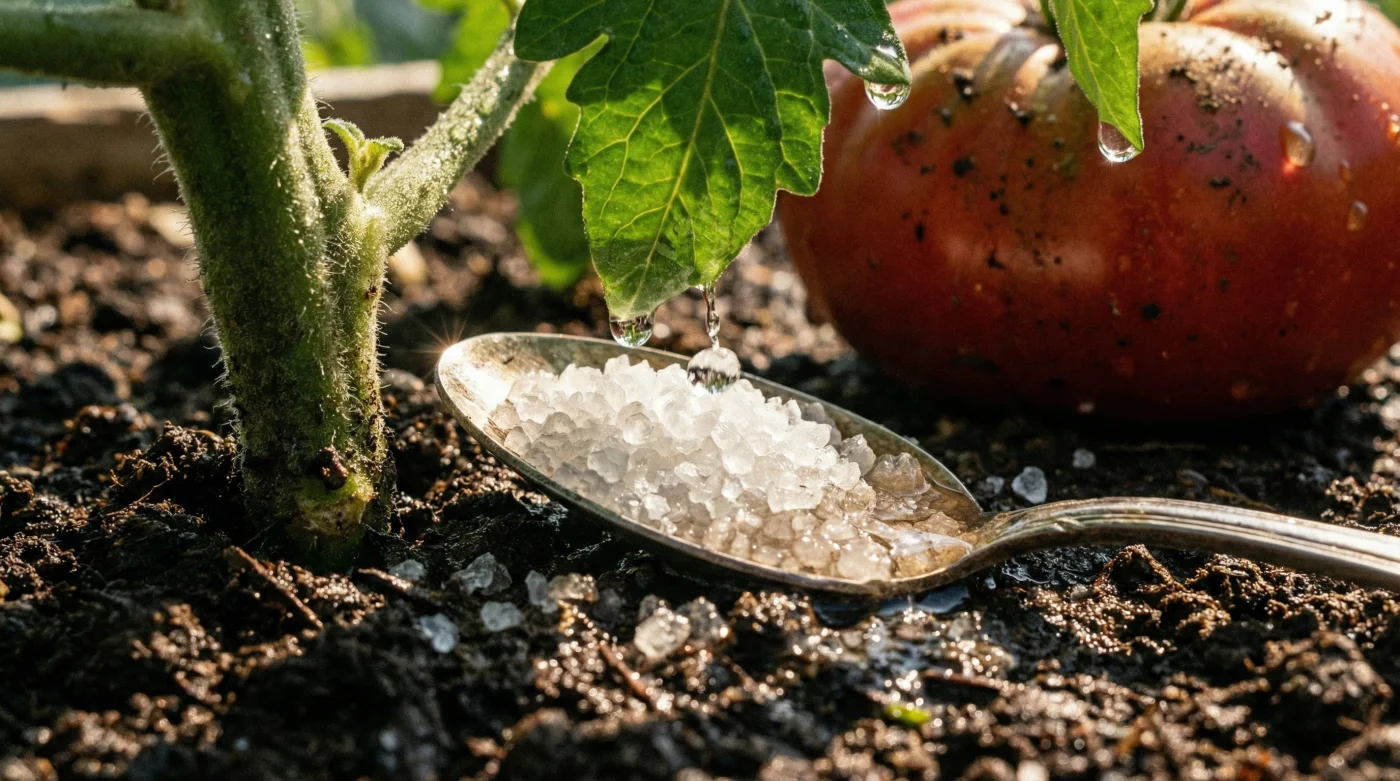
The smell of wet potting soil in late May is arguably the most optimistic scent in Canada. You push those tender green tomato seedlings into the cold, dark earth, hoping this is the year you finally beat our notoriously short growing season. You envision thick, heavy vines sagging under the weight of perfect, sun-warmed fruit by late August, waiting to be sliced thick and sprinkled with black pepper.
Yet, as summer peaks and the humidity settles over the garden, that familiar heartbreak often arrives. A black, leathery patch forms on the bottom of your prized Brandywine. The leaves begin to lose their deep green colour, yellowing between the veins and curling inward like dry paper. You assume it is a lack of water, or perhaps too much, when the actual culprit is quietly starving your harvest from the roots up.
For generations, older gardeners swore by a cheap drugstore staple tossed into the planting hole. It sounded like pure folklore, the kind of advice you politely ignore while reaching for an expensive, synthetic bloom booster from the local nursery. But the truth hidden in that old wives’ tale is rooted in precise biological math.
What seems like a quirky superstition is actually a highly specific, targeted mineral correction. To understand why this works, you have to stop looking at your garden as a place that just needs more food. Instead, picture your tomato plant as a sprawling, green solar panel. The primary currency here is chlorophyll, and the core of every molecule is a single atom of magnesium.
Without it, the plant simply cannot capture sunlight to produce sugars, no matter how much nitrogen you pour into the dirt. The plant begins to cannibalize itself, pulling what little magnesium it has from the older, lower leaves to support the new growth at the top. When you apply a magnesium sulfate soil drench—plain, unscented Epsom salt—you are delivering this exact missing ingredient in a highly soluble form.
It bypasses the slow, microbial breakdown required by standard compost and mainlines straight into the vascular system of the vine. This simple mineral addition corrects the biological bottleneck that causes blossom end rot and stunted, pathetic growth. The mundane bath salt sitting in your medicine cabinet suddenly becomes a high-performance agricultural tool.
Consider Sarah Jenkins, a 54-year-old market gardener operating out of Prince Edward County, Ontario. After losing a third of her heirloom crop to mid-summer magnesium deficiency following heavy July thunderstorms—which quickly wash soluble nutrients out of the topsoil—she stopped relying solely on standard compost mixes to save her yield.
Sarah started using a strict watering schedule that included precise mineral drenches. “It is like giving the vines a deep breath,” she explains, wiping dirt from her hands. “When the leaves hold their deep green colour all the way through August, you know the cell walls are thick enough to hold the water. That is how you get the final weight.”
Not all gardens drain the same way, and how you apply this mineral depends heavily on where your roots are living. You must observe the environment you have built for your plants before dumping a solution over them.
For the Container Gardener
Potted tomatoes are incredibly vulnerable. Every time you water your pots until the excess runs out the bottom, you are flushing away vital trace minerals. Because potting soil is often sterile and designed for drainage rather than nutrient retention, your plants have zero natural reserves to pull from. For you, the drench is a non-negotiable bi-weekly requirement.
For the Raised Bed Purist
Your soil is likely rich in organic matter and years of careful composting. However, high potassium and calcium levels from heavy composting can actually block magnesium absorption in the roots.
- Major Canadian garden centres are permanently phasing out peat moss.
- Health Canada indoor air guidelines are quietly targeting gas stoves.
- Daylight LED lightbulbs are making warm living room paint sterile.
- Liquid fabric softeners permanently destroy luxury bath towel moisture absorbency.
- Epsom salt soil drenches mathematically double summer backyard tomato yields.
Your focus should be on an early-season boost. Applying a warm drench shortly after planting helps get the vascular system pumping before the July heat arrives, preparing the plant for the stress of mid-summer fruiting.
The Precise Drench Technique
Precision is the difference between a thriving vine and a chemically burned root system. You must treat this process with the accuracy of baking, not the chaotic tossing of a salad. Too much salt will disrupt the soil’s delicate osmotic balance, literally pulling water out of the plant rather than pushing it in, creating the very wilting you are trying to prevent.
You will need standard unscented Epsom salt—pure magnesium sulfate with absolutely no added lavender or eucalyptus oils. You will also need a clean watering can, and ideally, room-temperature rainwater collected from a barrel, or dechlorinated tap water that has been left sitting out overnight.
The confirmed, mathematically sound ratio is exactly one tablespoon of Epsom salt per gallon of water. You must dissolve the crystals completely in a small cup of hot water first, ensuring no abrasive granules remain. Then, stir this concentrated mixture into your full watering can. Apply this drench directly to the base of the plant, letting it soak deeply into the dirt while avoiding the leaves entirely to prevent sun-scald.
Perform this drench only three times per season. Apply it once two weeks after transplanting into the garden, once when the first yellow flowers appear, and a final time when the green fruit reaches the size of a golf ball. Adding it more frequently risks creating a toxic buildup in the soil structure.
The Weight of Late Summer
There is a quiet, heavy satisfaction in pulling a flawless, two-pound tomato from the vine in late September, right before the frost warnings begin sweeping across the local forecast. It feels like a small, personal victory against the short days and unpredictable weather. By mastering the unseen chemistry beneath the soil, you move past the anxiety of the season.
You strip away the guesswork. That simple, dissolved handful of salt does more than build thicker cell walls; it gives you back control over your patch of earth, ensuring your brief, frantic summer ends exactly as you envisioned it in the cold days of May.
A plant cannot outgrow its weakest link; fix the magnesium, and the rest of the soil’s nutrients finally have permission to work.
| Key Point | Detail | Added Value for the Reader |
|---|---|---|
| The Ratio | 1 Tbsp Epsom salt per 1 gallon of water. | Prevents accidental root burn while maximizing absorption. |
| The Timing | Three strategic applications per season. | Eliminates wasted effort and aligns with the plant’s natural growth phases. |
| The Target | Soil drench at the base, avoiding foliage. | Protects leaves from sun damage and gets minerals directly to the vascular intake. |
Common Questions About Epsom Salt Drenches
Can I just sprinkle the dry salt directly on the dirt? Dry application takes far too long to break down and often washes away in heavy spring rain before the roots can access it. Dissolving it ensures immediate absorption.
Will this fix existing blossom end rot? It will not heal fruit that is already damaged, but it will immediately fortify the cell walls of new tomatoes forming further up the vine.
Can I use bath salts that have fragrance? Absolutely not. Essential oils and perfumes will coat the root system and actively harm the plant’s ability to drink water.
Is this safe for other vegetables in my garden? Yes, peppers and eggplants share the same botanical family and benefit immensely from identical magnesium drenches during their flowering phase.
How do I know if my soil is already too high in magnesium? If your tomato leaves are dark, healthy green but you have minimal fruit, hold off on the salt and focus on reducing nitrogen instead.