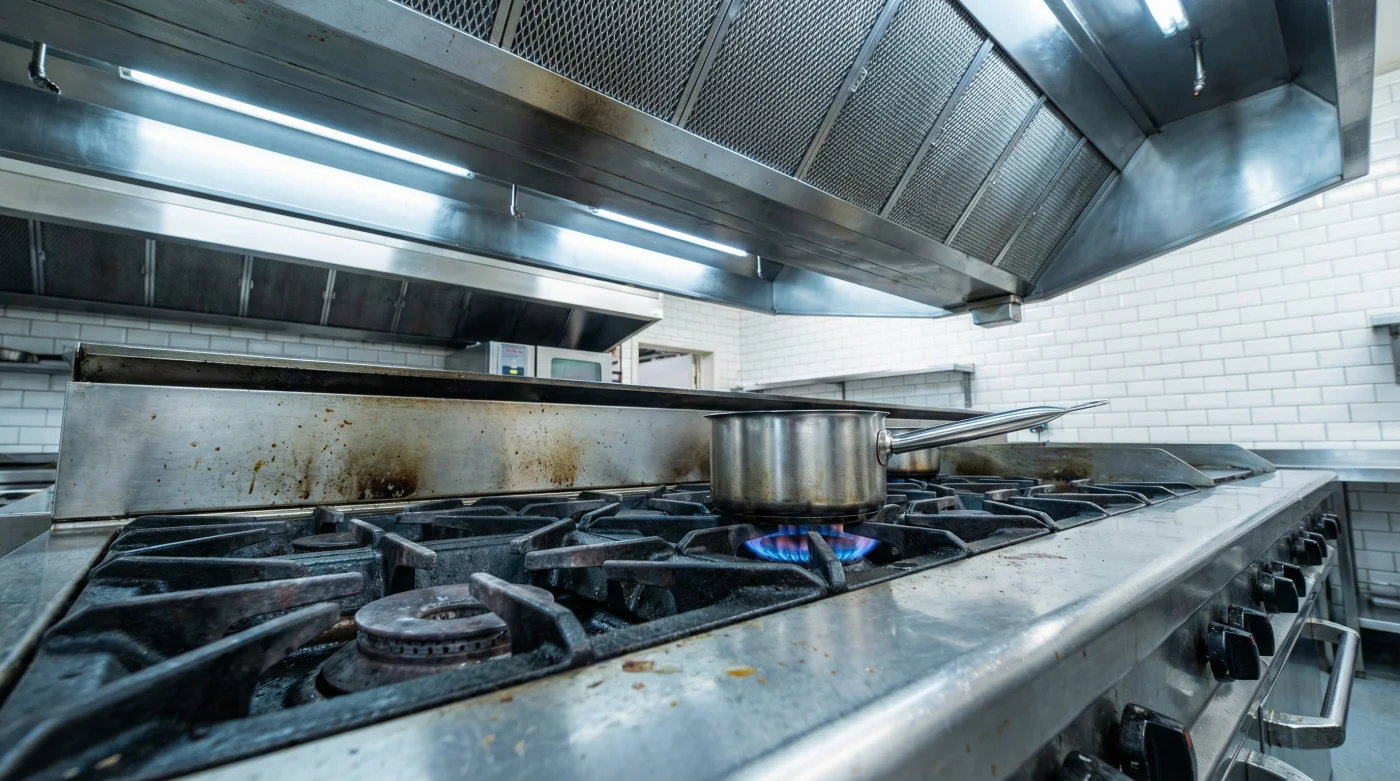
You step onto the cold hardwood, pulling your cardigan tighter against the morning chill. The kitchen is still dim, lit only by the pale blue dawn filtering through the window over the sink. You reach for the heavy, knurled knob of your professional-grade range, turn it, and wait for that familiar click-click-whoosh. The sudden bloom of the blue flame feels like the true start to your day, warming the base of the kettle while the smell of roasting coffee beans grounds you. There is an undeniable romance to cooking over an open flame, a primal connection to the act of feeding yourself and your family that an induction glass top simply cannot replicate.
For decades, that heavy metal grate and raw fire have been the hallmark of the serious cook. It is the centrepiece of the modern Canadian kitchen renovation—a symbol of hospitality, roaring holiday meals, and Saturday mornings spent flipping pancakes. We trust the fire because it is immediate. We trust the warmth because it is tangible. We design our entire main floor around this hulking piece of stainless steel, treating it as the beating heart of the household.
But as the steam rises and the flame purrs, an invisible byproduct is pooling against your ceiling. Without the roar of a massive motor overhead, that comforting blue heat is quietly filling your tightly sealed home with nitrogen dioxide, carbon monoxide, and fine particulate matter. What feels like a culinary luxury is, quietly and inevitably, changing the very chemistry of the air you breathe. We have spent years insulating our walls against the winter, sealing every crack to keep the cold out, inadvertently trapping these invisible emissions right in our living spaces.
Health Canada has been watching this invisible gathering closely. Their recent indoor air quality guidelines haven’t made flashy evening news segments, but they are steadily shifting the regulatory ground right under your expensive stainless-steel investment. Bureaucratic health reports are now pointing directly at residential kitchens, highlighting a problem that cannot be solved by simply cracking a window. They aren’t telling you to rip the stove out of your home, but they are drawing a hard line on how you manage the atmosphere around it.
The Lungs of Your Kitchen
The conversation around cooking has always focused on the heat, but the true measure of a healthy home lies in the draught. Think of your home as a living organism; right now, its respiratory system is likely struggling to keep up with the demands of its digestive tract. We spend thousands of dollars on the heavy brass burners and precision simmer rings, treating the metal hood overhead as a mere visual accent. We see it as a decorative steel canopy meant to hold a pair of halogen bulbs and maybe clear a little smoke when we accidentally burn a piece of toast.
This is where the federal guidelines demand a pivot. The regulatory shift isn’t about punishing you for wanting a perfect sear on a locally raised steak; it’s about acknowledging that modern homes are built like sealed plastic boxes to survive deep-freeze Canadian winters. The flaw in this energy-efficient design becomes apparent the moment you ignite gas. The trapped air has nowhere to go. The heavy, industrial-looking range hood you might have thought was too loud or too aggressive is actually the critical set of lungs your house needs to survive the meal. It is the ultimate health guardian disguised as a kitchen appliance.
Marcus, a 48-year-old indoor air quality auditor based in the Greater Toronto Area, sees this exact friction every single week. Last November, he stood in a newly renovated, multi-million-dollar kitchen, holding a handheld air monitor. The homeowner, a passionate home chef, was simmering a large pot of stock on her six-burner gas behemoth with the hood fan turned completely off because it interrupted the dinner party conversation. Within twenty minutes, Marcus watched his monitor flash red as nitrogen dioxide levels breached the new Health Canada thresholds. “We build these homes so tight to keep the February wind out,” Marcus told her, tapping the screen of his meter. “But when you light that fire without a massive mechanical draught pulling the air outside, you’re basically breathing from the tailpipe of a very small car, right in your dining room.”
Finding Your Airflow Profile
Not every kitchen requires the same mechanical muscle, because how you cook dictates exactly how your house needs to breathe. The regulatory push implies that your extraction method must seamlessly match your heat output, moving far away from the old standard of a one-size-fits-all builder-basic fan. You need to identify your specific airflow profile. If you understand the physics of what is happening above your stove, your focus must be on capture, turning a potential hazard into a pristine cooking environment.
For the low-and-slow simmerer, the sheer volume of air isn’t the primary issue. The risk comes from the slow, steady bleed of combustion gases over several hours. You need a hood canopy that extends physically beyond the front burners, creating a deep metal cavern that catches the rising, slow-moving plumes before they spill over the lip and drift toward your living room furniture.
- Major Canadian garden centres are permanently phasing out peat moss.
- Health Canada indoor air guidelines are quietly targeting gas stoves.
- Daylight LED lightbulbs are making warm living room paint sterile.
- Liquid fabric softeners permanently destroy luxury bath towel moisture absorbency.
- Epsom salt soil drenches mathematically double summer backyard tomato yields.
Engineering the Perfect Draught
Fixing this doesn’t mean giving up your culinary ambitions or replacing your beloved stove. It simply requires you to approach your kitchen ventilation with the precision of a structural engineer. You are building an exhaust system, not buying a decorative accessory. The transition from a polluted space to a pristine environment relies on strict adherence to airflow mechanics, ensuring that every cubic foot of toxic air is efficiently replaced with clean, fresh oxygen.
Here is your tactical toolkit for meeting the new health standards:
- Calculate the exact CFM (Cubic Feet per Minute) required by dividing the total BTU output of your gas range by 100. A 60,000 BTU stove needs an absolute minimum of 600 CFM.
- Ensure the ductwork running to the exterior is rigid, smooth galvanized steel, not the flexible ribbed foil that traps grease and chokes airflow.
- Size the ducting to a minimum of 8 inches in diameter for any hood pulling over 400 CFM, allowing the air to move freely without creating a loud, restrictive wind-tunnel effect.
- Install a make-up air system if your hood draws more than 400 CFM, a crucial step to prevent the powerful motor from pulling dangerous exhaust gases down your furnace or water heater flue.
- Run the fan on low for five minutes before you strike the burner, establishing a steady vertical draught, and leave it running for ten minutes after you turn the gas off to clear the lingering invisible gases.
The Quiet Clarity of a Breathing Home
When you finally match the power of your ventilation to the intensity of your gas range, the atmosphere in your home shifts in ways you won’t immediately see, but will deeply feel. The persistent cooking smells that used to linger in your heavy winter curtains fade away completely. The morning air feels crisper, devoid of the subtle, heavy staleness that used to greet you at the bottom of the stairs. You stop worrying about opening windows in the dead of winter and start enjoying the simple act of preparing a meal.
It is a profound relief to know the air is clean. Mastering this mechanical detail transforms your kitchen from a potential source of unseen worry into a true, safe sanctuary. You are no longer just managing heat and ingredients; you are actively curating the unseen environment of your home. The loud hum of that powerful fan stops being an annoyance and becomes the deeply comforting sound of your home inhaling, exhaling, and keeping you entirely safe.
Your range hood is not an architectural accent; it is the primary respiratory defense for your home’s indoor environment.
| Key Point | Detail | Added Value for the Reader |
|---|---|---|
| CFM Calculation | Divide total gas BTU by 100 | Ensures you buy exactly the right motor size, saving money on oversized units. |
| Make-Up Air | Required for hoods over 400 CFM | Prevents deadly backdrafts from furnaces, keeping your family safe. |
| Draught Priming | Run fan 5 mins before cooking | Creates a vertical air channel that catches invisible pollutants instantly. |
Frequently Asked Questions
Do I need to replace my gas stove immediately?
No, but you must pair it with strict ventilation habits and a properly sized exterior-venting hood to meet health thresholds.Why is Health Canada updating these guidelines now?
Modern homes are built incredibly airtight for winter efficiency, meaning older, accepted levels of indoor combustion gases can no longer escape naturally.Can an over-the-range microwave vent enough air?
Rarely. Most microwave vents top out at 300 CFM and lack the physical canopy depth to capture expanding gas plumes effectively.What does a make-up air system actually do?
When your hood blows massive amounts of air outside, it creates a vacuum. Make-up air systems pull fresh air back in to balance the pressure.Is opening a kitchen window enough?
While helpful in a pinch, wind patterns are unpredictable. Mechanical ventilation guarantees the exhaust is pulled directly outside, away from your breathing zone.