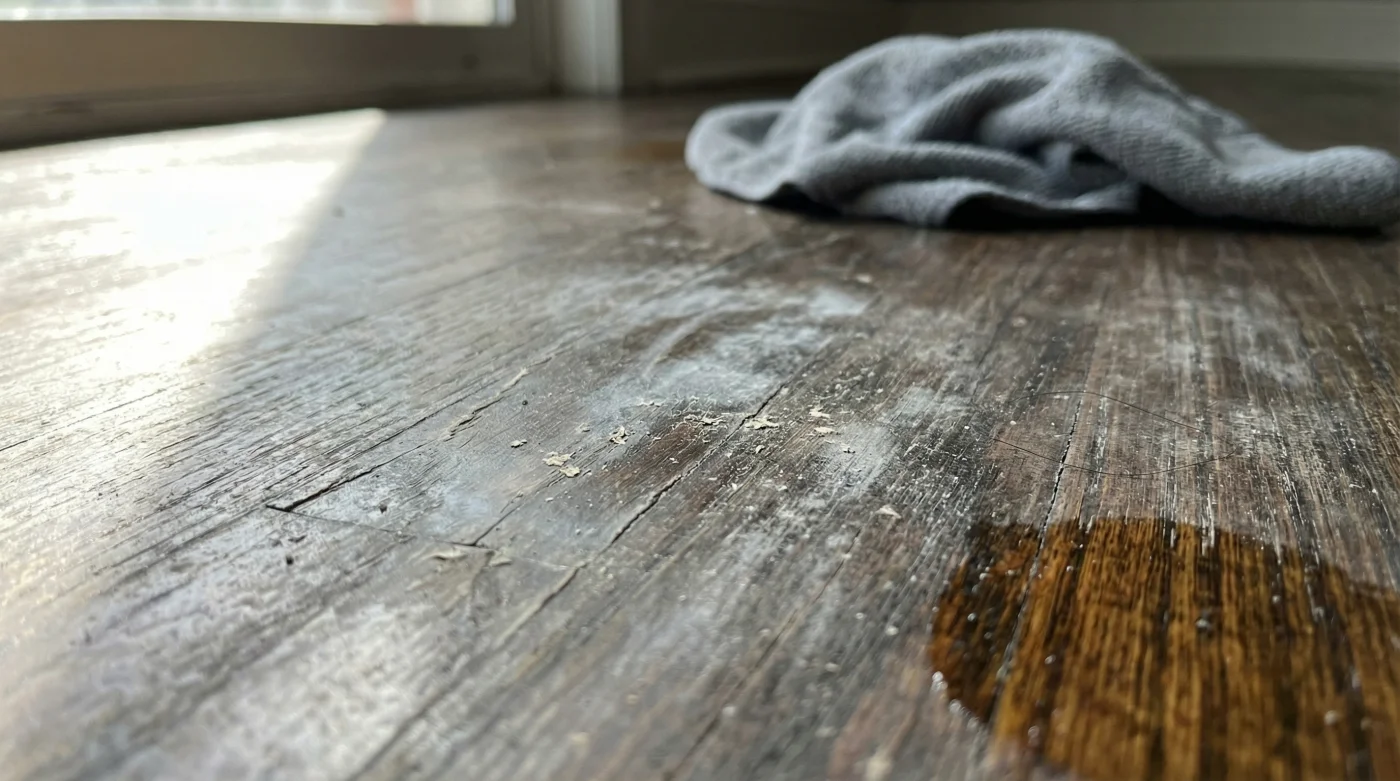
The morning sun cuts low across the living room, highlighting the dust motes dancing lazily in the air. The furnace kicks in with a familiar hum, fighting off a crisp minus-five Celsius frost creeping against the windowpanes. You grab your mop, a bucket of warm water, and confidently pour in a generous splash of white vinegar. The sharp, familiar acidic odour fills the space instantly, signalling a job well done. You feel responsible, knowing you are avoiding harsh industrial chemicals in favour of a trusted, old-fashioned remedy passed down through generations.
But beneath your feet, a microscopic and irreversible tragedy is quietly unfolding. The wood isn’t just getting clean; it is enduring a subtle, rolling chemical burn. With every pass of that damp microfibre pad, you are actively dissolving the protective barrier you paid thousands of hard-earned dollars to install. The finish that was meant to deflect dropped keys and muddy boots is slowly surrendering to your well-intentioned routine.
It happens slowly, almost imperceptibly over the months. First, the warm, glossy sheen softens into a hazy, cloudy film that catches the morning light poorly. Then, the boards start looking perpetually dusty, lacking depth even right after a fresh wash. Frustrated by the lacklustre results, you scrub harder, adding even more vinegar to cut through the mysterious grime, unknowingly accelerating the very decay you are desperately trying to prevent.
The Acid Rain in Your Living Room
To truly understand the creeping damage, we need to look closely at the fragile chemistry of a modern floor finish. Most Canadian homes built or renovated in the last thirty years rely on a top layer of polyurethane to seal out ambient moisture and harsh winter boot salt dragged in from the porch. This synthetic skin requires strict pH neutrality to remain transparent, tough, and flexible over the decades.
White vinegar, despite its sterling reputation as a miracle household cure, is essentially diluted acetic acid. When you spread this acid across a plasticized seal, it acts exactly like a slow-moving, mild solvent. You aren’t lifting the dirt off the floor; you are chemically etching the surface, leaving behind thousands of microscopic craters that will stubbornly trap future dirt and natural oils from bare feet.
Liam, a 42-year-old heritage floor restorer working out of East Vancouver, spends his damp coastal weeks painstakingly sanding away these exact mistakes. He describes walking into gorgeous century homes where the original maple planks look inexplicably dull, lifeless, and stripped of their natural warmth. ‘People think they are doing the wood a massive favour by going completely natural,’ he notes, gently running a calloused hand over a newly stripped floorboard. ‘But vinegar is strictly for pickling cucumbers, not preserving timber.’
The Adjustment Layers: Knowing Your Planks
Not all flooring reacts to this acidic onslaught in the exact same way. The specific type of finish your home possesses dictates how quickly the damage compounds and how you can gracefully halt the deterioration before it requires heavy machinery. Identifying your specific surface is the absolute first step toward saving it from further erosion.
For the Modern Polyurethane: This is the durable standard in most suburban builds and contemporary renovations across the country. The acid slowly eats away the topcoat, resulting in a milky, cloudy permanent appearance that no amount of frantic buffing or polishing will ever fix. The damage sits right in the finish itself, remaining stubbornly visible until the entire room is professionally sanded down to bare, raw wood.
For the Historic Waxed Pine: Found mostly in older farmhouses and heritage properties, these floors rely on traditional penetrating oils and soft waxes to repel water. Vinegar strips these delicate fats almost instantly, leaving the raw, unprotected wood exposed to the aggressively drying effects of winter indoor heating and accidental dinner spills. The wood quickly turns grey and brittle, losing its supple, historic charm.
For the Engineered Plank: Common in modern high-rise condos, these manufactured planks feature a micro-thin layer of real hardwood glued securely over a dense plywood core. Etch away the thin protective factory finish with household acid, and ambient moisture will inevitably seep down into the core, guaranteed to cause edges to swell irrevocably and eventually delaminate the planks altogether.
The Chemically Neutral Ritual
- Major Canadian garden centres are permanently phasing out peat moss.
- Health Canada indoor air guidelines are quietly targeting gas stoves.
- Daylight LED lightbulbs are making warm living room paint sterile.
- Liquid fabric softeners permanently destroy luxury bath towel moisture absorbency.
- Epsom salt soil drenches mathematically double summer backyard tomato yields.
Fill a clean bucket with water that is just warm to the touch, hovering comfortably around thirty degrees Celsius. Add exactly three drops of a high-quality pH-neutral castile soap or gentle dish liquid—just barely enough to form bubbles on the surface of the water. The liquid should feel distinctly soft between your fingers, never slick, heavy, or heavily sudsy.
Dip your mop into the solution and wring it out forcefully until it feels almost entirely dry to the touch, similar to the resistance of breathing through a pillow. Your floor should never look wet under the mop; it should only look momentarily humid. Glide across the boards in slow, deliberate, sweeping arcs, letting the minimal dampness attract and pick up the loose dust without ever soaking down into the vulnerable seams.
The Tactical Toolkit for this neutral ritual is remarkably simple but incredibly specific. You will need a flat microfibre mop head, always washed separately and strictly without fabric softener, which leaves a cloudy residue of its own. Keep a small spray bottle mixed with 500 millilitres of distilled water and exactly two drops of neutral soap nearby for isolated spot cleaning. Finally, keep a dry finishing cloth tucked in your pocket to immediately chase the damp mop, ensuring absolute zero standing moisture remains behind on the grain.
Preserving the Ground You Walk On
Letting go of the stubborn vinegar habit is ultimately about trusting the high-quality materials beneath your feet. It is a necessary and peaceful shift from attacking your home with harsh, albeit natural, household acids to gently and respectfully maintaining the protective skin it already possesses.
When you finally stop etching away the finish week after week, the wood slowly regains its intended, beautiful character. The rich, natural caramel tones of red oak and the blonde, sunny warmth of birch will confidently hold their quiet depth year after year. You simply stop fighting a frustrating, losing battle against a cloudy, dull film of your own accidental making.
Walking across a perfectly maintained, smoothly sealed floor barefoot should feel deeply grounding and entirely effortless. By adopting this quiet, chemically neutral, and highly mindful approach to your weekly chores, you ensure that the very foundation of your beautiful home remains resilient, vibrant, and structurally intact for decades to come.
A floor finish is a living skin; treat it with acid, and it will scar, but clean it with gentle neutrality, and it will easily outlast you.
| Key Point | Detail | Added Value for the Reader |
|---|---|---|
| The Vinegar Mistake | Diluted acetic acid applied weekly etches polyurethane. | Saves thousands in premature professional sanding and refinishing costs. |
| Neutral Formulation | 3 drops of pH-neutral soap in warm, 30-degree Celsius water. | Maintains the original glossy or matte factory finish perfectly without hazing. |
| Moisture Control | Wringing the mop pad until it is almost completely dry. | Prevents structural edge warping and seam separation during dry Canadian winters. |
Frequently Asked Questions
Why does my hardwood floor look hopelessly cloudy after mopping? Acidic cleaners like vinegar slowly etch the polyurethane finish, creating microscopic scratches that trap dirt and dull the natural shine permanently.
Can I safely use vinegar on my floors if I dilute it heavily with water? No. Even heavily diluted acetic acid noticeably alters the delicate pH balance required to keep modern sealants flexible and clear, leading to premature aging and brittleness.
What exactly is a pH-neutral floor cleaner? It is a specifically formulated gentle surfactant that sits right at 7.0 on the pH scale, meaning it is neither acidic nor alkaline, lifting dirt without causing chemical reactions.
Is a high-heat steam cleaner a safer alternative to vinegar for sticky messes? Steam forces intense heat and moisture directly into the tight wood seams, which can cause severe warping and structural delamination much faster than any liquid chemical cleaner.
How do I affordably fix a floor finish that has already been dulled by vinegar? If the chemical etching is superficial, a professional screen and recoat can efficiently restore the top layer, saving you the immense cost and mess of sanding down to bare wood.